

The Mysterious Vitamin B12
For many years I was a strict vegan, and enjoyed being so. For many years I felt better on this diet but then gradually, I began to feel as though I were missing something. Now, I have some autoimmune issues, let's be clear, so having fatigue is not unusual at all, and it wasn't until my clinical nutrition class that I thought I might be deficient in B12. It had never occurred to me, since B12 had long been a component of my multi-vitamin. But as my teachers so kindly point out, our bodies don't always follow the textbook and sometimes we need more of things. For me one of the things I needed more of turned out to be this vitamin. What makes B12 so interesting is that plants, animals and fungi don't actually make it, and it's name is actually cobalamin, so it's molecule is centered around cobalt. I'm including an exert from Wiki, since it is actually an accurate one, you may find of interest:
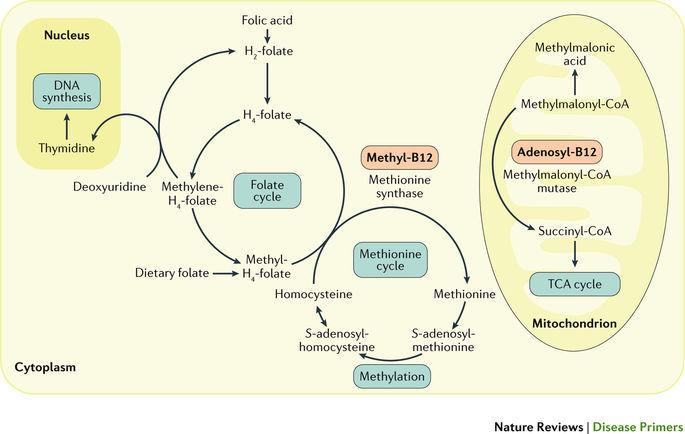
"Vitamin B12, also called cobalamin, is a water-soluble vitamin that has a key role in the normal functioning of the brain and nervous system via the synthesis of myelin (myelinogenesis)[1][2], and the formation of red blood cells. It is one of eight B vitamins. It is involved in the metabolism of every cell of the human body, especially affecting DNA synthesis, fatty acid and amino acid metabolism.[3] No fungi, plants, or animals (including humans) are capable of producing vitamin B12. Only bacteria and archaea have the enzymes needed for its synthesis. Some substantial sources of B12 include animal products (shellfish, meat), fortified food products, and dietary supplements.[4][5] B12 is the largest and most structurally complicated vitamin and can be produced industrially through bacterial fermentation synthesis, typically used to manufacture B12 for fortified foods and supplements. It can also be produced synthetically via vitamin B12 total synthesis.
Vitamin B12 consists of a class of chemically related compounds (vitamers), all of which show pharmacological activity. It contains the biochemically rare element cobalt (chemical symbol Co) positioned in the center of a planar tetra-pyrrole ring called a corrin ring. The vitamer is produced by bacteria as hydroxocobalamin, but conversion between different forms of the vitamin occurs in the body after consumption.
Vitamin B12 was discovered[6] as a result of its relationship to the disease pernicious anemia, an autoimmune disease in which parietal cells of the stomach responsible for secreting intrinsic factor are destroyed; these cells are also responsible for secreting acid in the stomach. Because intrinsic factor is crucial for the normal absorption of B12, its lack in the presence of pernicious anemia causes a vitamin B12 deficiency. Many other subtler kinds of vitamin B12 deficiency and their biochemical effects have since been made clear.[7] Due to impairment of vitamin B12 absorption during aging, people over age 60 are at risk of deficiency.[4]"
Little clues started coming together. For one, I am female, and females naturally need a bit more iron. Another is that I have severe Celiac's disease among other gastrointestinal issues. The odds are, I'm not secreting enough intrinsic factor as well. This combination plus a lack of sufficient B12 would eventually make anyone a bit fatigued.
How curious it though that this vitamin is made by prokaryotes...it is stored in the muscles of animals although they do not make it. They get it mainly from the soil on the roots of plants that they eat. Such an interesting evolution we partake in.
So, here is a list of things to eat with B12:
Of course, your meats, dairy, eggs, seafood for non-veggies.
For veggies, you can take supplements, fortified brewer's yeast, and fortified nut or soy milks.
I will update this blog as I learn new information. Thank you for reading!


Comments